
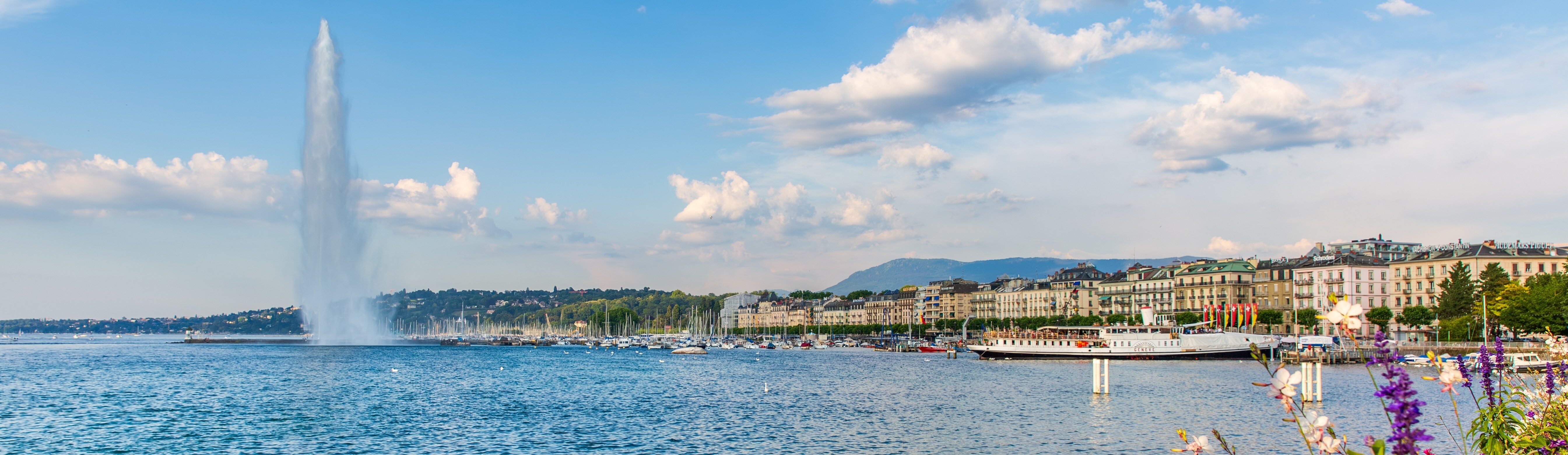

On the way to swim in the lake, with my daughter
On the way to swim in the lake, my daughter at my side. On my mind: an interview I did last week with a rocket scientist. And an NZZ article about the "club of star female managers" that has stayed with me since.
The rocket scientist added an MBA on top of her technical training and today operates as a business manager one level below the executive committee. Yet she earns noticeably less than male colleagues of comparable seniority. The NZZ article describes the other end of the scale: a small group of women who today hold more — and more prestigious — board mandates than most men. At the same time, the Schilling Report shows that 78 percent of executives at Swiss listed companies are men.
All three pictures are true. Together, they point to a structural problem that we, as a business location, have so far been discussing at the wrong point in the pipeline.
First, the competence question — independent of gender
The board of directors carries strategic responsibility for a company: it sets direction, oversees the executive committee, and is liable for finances, organisation, and compliance. This is not a representative function. It is hard governance work with personal liability.
That is why a board needs, above all, one thing: competence and experience equal to that responsibility. This is not a gender question. A quota that undercuts this standard harms everyone — governance, the company, and, paradoxically, the very women it is meant to strengthen. This is exactly the thesis of Margit Osterloh and Katja Rost in their book "Bumerang Frauenquote" ("Boomerang Women's Quota"), which the NZZ references.
But then the real question: where is the supply?
If we, as an economy, want more women to reach the executive committee and the board — not to fulfil a quota, but because they are the most competent candidates in the market — then it is not enough to set a number at the end of the pipeline. We have to look at the beginning of the pipeline. And that is where it gets uncomfortable.
In Switzerland, around two percent of children and adolescents are considered highly gifted (IQ of 130 or above) — out of roughly 950,000 pupils, that is about 19,000 young people with exceptional cognitive potential. Based on research by Swiss public broadcaster SRF, the Parents' Association for Gifted Children (EHK) estimates that roughly one in five Swiss schoolchildren is underchallenged. Psychotherapist Elisabeth Zollinger, who has tested children for giftedness for more than 16 years, puts the core problem plainly: giftedness in Switzerland is still a taboo topic — a child who stands out is quickly seen as arrogant rather than in need of support. That is not a footnote; it is a cultural recognition problem that stands in the way of identifying potential, before gender even enters the picture.
A second, gender-specific layer sits on top of this general recognition problem. Research on underachievement shows that underchallenged boys tend to react with conspicuous behaviour — and are noticed as a result. Underchallenged girls tend to withdraw. They don't stand out. They are identified less often.
This matches what practitioners observe on the ground: a recent survey by the University of Teacher Education in Special Needs (HfH) on the state of gifted-education provision in German-speaking Swiss schools and in Liechtenstein shows how inconsistent and underdeveloped the identification and support of giftedness still is nationwide — decades after the topic first appeared on the education-policy agenda.
Nor is this an isolated finding limited to school identification: the same structural — rather than individual — pattern shows up in choice of study as well. Research by Buser et al. shows that high-performing girls, in particular, are more likely than lower-performing girls to avoid competition in male-dominated fields — not for lack of ability, but because of anticipated social costs. In Switzerland, women make up around 22 percent of students in technical and mathematical degree programmes, and around 8 percent of apprentices in software development.
A country that — unlike resource-rich nations — finances itself almost exclusively through intellectual capital is thereby systematically failing to identify and develop a significant part of its own human capital. And, going by the data, this disproportionately affects girls.
Why this matters directly for the board and ExCo debate
You cannot declare a target quota at the end of a 20- to 30-year education and career path without having identified, developed, and accompanied through the relevant career stages enough women with top potential at the start of that path. This is not an illiberal argument — it is simply arithmetically naive.
What is needed instead:
-
Systematic, gender-neutral talent diagnostics in schools — not only once a child stands out, but before quiet underchallenge turns into "average" grades and wasted potential. Proven tools already exist: acceleration (skipping grades or learning units), compacting (streamlining the core curriculum for children who have already mastered the material), and enrichment programmes have been tested for decades according to the academic literature — but their use depends heavily on the individual school and canton, not on a binding national standard.
-
Mandatory training and continuing education in gifted education for teachers and school psychologists — a demand the EHK has been making for years, because giftedness is most often overlooked in practice precisely where no one is systematically looking for it.
-
Framework conditions that prevent women from being structurally disadvantaged over the course of their careers — from childcare to the part-time trap.
-
An understanding of business and leadership that does not force high-performing women to choose between competition and belonging.
This is slower, less spectacular, and far less photogenic than a percentage in an annual report. But it is the only path that actually leads to a broader base of competent female candidates — and it would also ease the "overboarding" of the same two dozen names described in the NZZ article, which currently does more to harm the cause of equality than to help it.
That afternoon at the lake, my daughter was just in the water. But the question that has stayed with me since is this: will we, by then, have recognised what is in her — regardless of whether she one day reaches a leadership position with an MBA and specialist expertise, like the business manager, or chairs a board, like the women in the NZZ article? Or will we continue to leave it to chance whether these same women are ultimately paid fairly, too?